

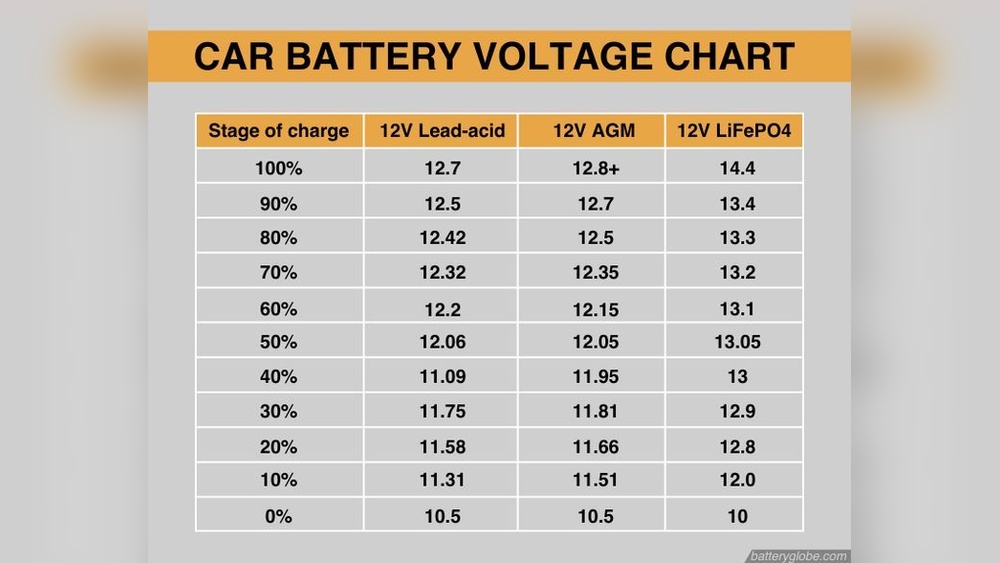
A car battery voltage chart is a simple guide. It shows the battery’s voltage levels. These levels tell you how healthy the battery is.
Understanding this chart helps you keep your car running well. It tells if the battery needs charging or replacing. This is important for any car owner.
Why is Car Battery Voltage Important?
The battery powers your car’s engine and lights. If the battery voltage is too low, the car may not start.
High or low voltage can mean problems. The voltage tells you if the battery is full, weak, or dead.
Checking voltage often can save time and money. You avoid being stuck with a dead battery.
What Does the Car Battery Voltage Chart Show?
The chart shows voltage numbers and their meanings. These numbers come from testing the battery with a tool called a multimeter.
Here is a simple voltage chart for a 12-volt car battery:
| Voltage Reading (Volts) | Battery Condition | Meaning |
|---|---|---|
| 12.6 or higher | Fully Charged | Battery is healthy and ready to use. |
| 12.4 to 12.6 | Good Charge | Battery is okay but not full. |
| 12.2 to 12.4 | Fair Charge | Battery is weak and may need charging soon. |
| 12.0 to 12.2 | Low Charge | Battery is low and might not start the car. |
| Below 12.0 | Bad Battery | Battery is very weak or dead. Needs replacing. |
How to Read the Battery Voltage Chart
First, use a multimeter to measure your car battery voltage. Turn off the engine before testing.
Connect the red lead to the battery’s positive (+) terminal. Connect the black lead to the negative (-) terminal.
Look at the multimeter screen. It shows the voltage in volts (V).
Compare this number to the voltage chart above. You will know your battery’s condition immediately.
Voltage Levels When Engine is Running
The battery voltage changes when the engine is on. The alternator charges the battery. This raises the voltage.
Normal voltage range with engine running:
- 13.5 to 14.5 volts – Battery is charging properly.
- Below 13.5 volts – Battery is not charging enough.
- Above 15 volts – Charging system may be overcharging.
If voltage is too low or too high, the battery or alternator might have problems.

Credit: www.reddit.com
Voltage During Engine Cranking
When you start the car, voltage drops briefly. This is called cranking voltage.
Normal cranking voltage ranges from 9.6 to 10 volts.
If voltage falls below 9.6 volts, the battery may be weak or failing.
Low cranking voltage means the car may not start or may start slowly.
Signs of a Bad Battery
Besides voltage, there are other signs of battery problems. Watch for these:
- Clicking sound when turning the key.
- Car starts slowly or not at all.
- Dim headlights or dashboard lights.
- Battery warning light on the dashboard.
If you see these signs, check the battery voltage.
Credit: www.neware.net
How to Keep Your Battery Healthy
Follow these tips to keep your battery working well:
- Test battery voltage every few months.
- Keep battery terminals clean and tight.
- Drive the car regularly to charge the battery.
- Avoid leaving lights on when the engine is off.
- Replace the battery every 3 to 5 years.
Why Use a Car Battery Voltage Chart?
The chart helps you understand battery health fast. It shows if you need to charge or replace the battery.
Using the chart can prevent sudden car breakdowns. It saves money by avoiding expensive repairs.
How to Test Your Car Battery Voltage
Follow these simple steps to test your battery:
- Turn off your car engine.
- Set your multimeter to DC volts, usually 20V range.
- Connect the red lead to the positive battery terminal.
- Connect the black lead to the negative battery terminal.
- Read the voltage on the multimeter display.
- Compare the number to the voltage chart.
Understanding Battery Voltage and Health
A fully charged 12-volt battery shows about 12.6 volts at rest. This means the battery is in good shape.
If the voltage is below 12.4 volts, the battery is not fully charged.
Voltage below 12 volts means the battery is weak or damaged.
What Affects Car Battery Voltage?
Many things affect battery voltage:
- Battery age and condition.
- Weather – cold weather lowers voltage.
- Car usage and charging system.
- Electrical loads like lights and radio.
Check voltage often to spot problems early.
Summary of Car Battery Voltage Chart
Here is a quick summary:
| Voltage | Condition | What to Do |
|---|---|---|
| 12.6 V or higher | Good | Battery is healthy. No action needed. |
| 12.4 to 12.6 V | Fair | Charge battery soon. |
| 12.0 to 12.4 V | Weak | Charge or test battery further. |
| Below 12.0 V | Bad | Replace battery. |
Final Tips
Always keep a multimeter in your car or garage. It is a handy tool for battery checks.
Check voltage regularly, especially before long trips. Do not ignore signs of battery trouble.
Use the car battery voltage chart to help you. It is simple and useful for all drivers.
Taking care of your battery means fewer problems on the road.
Frequently Asked Questions
What Voltage Is Considered A Bad Car Battery?
A car battery voltage below 12. 4 volts at rest indicates a weak battery. Voltage under 10 volts while cranking signals a bad battery.
Is 11.9 Volts Enough To Start A Car?
11. 9 volts is generally too low to reliably start a car. A healthy battery should read around 12. 6 volts. Low voltage may cause starting issues or failure.
What Is A Healthy Car Battery Voltage Chart?
A healthy car battery voltage is 12. 6 volts or above at rest. During cranking, it should be around 10 volts. When running, voltage ranges between 13. 5 to 15 volts indicate a good battery. Below 12. 4 volts at rest signals a weak or failing battery.
What Voltage Is 50% Of A 12v Battery?
50% of a 12V battery is approximately 6 volts. This indicates a deeply discharged or faulty battery.
