

Have you ever wondered how your GPS knows exactly where you are and guides you step by step? It might seem like magic, but there’s a fascinating science behind it.
Understanding how GPS navigation works can help you use it more effectively and even troubleshoot when things go wrong. You’ll discover the simple technology powering your navigation system, why it’s so accurate, and how it keeps you on the right path no matter where you go.
Keep reading, and you’ll never look at your GPS the same way again.

Credit: timeandnavigation.si.edu
Gps Basics
GPS Basics explain how devices find your exact location on Earth. It uses a special system of satellites and signals. This system works all day and night, anywhere in the world. Understanding the basics helps you see how GPS guides you accurately.
Satellite Network
The GPS system has about 30 satellites orbiting Earth. These satellites circle the planet twice a day. Each one sends signals with its position and time. Your device listens to many satellites to get location data.
Signal Transmission
Satellites send radio signals to the GPS receiver. These signals travel at the speed of light. The receiver measures how long the signals take to arrive. This timing helps calculate the distance from each satellite.
Receiver Function
The GPS receiver collects signals from at least four satellites. It uses these to find your exact spot on Earth. The receiver does math to pinpoint latitude, longitude, and altitude. This data shows your location on the map clearly.
Credit: spaceplace.nasa.gov
Triangulation Process
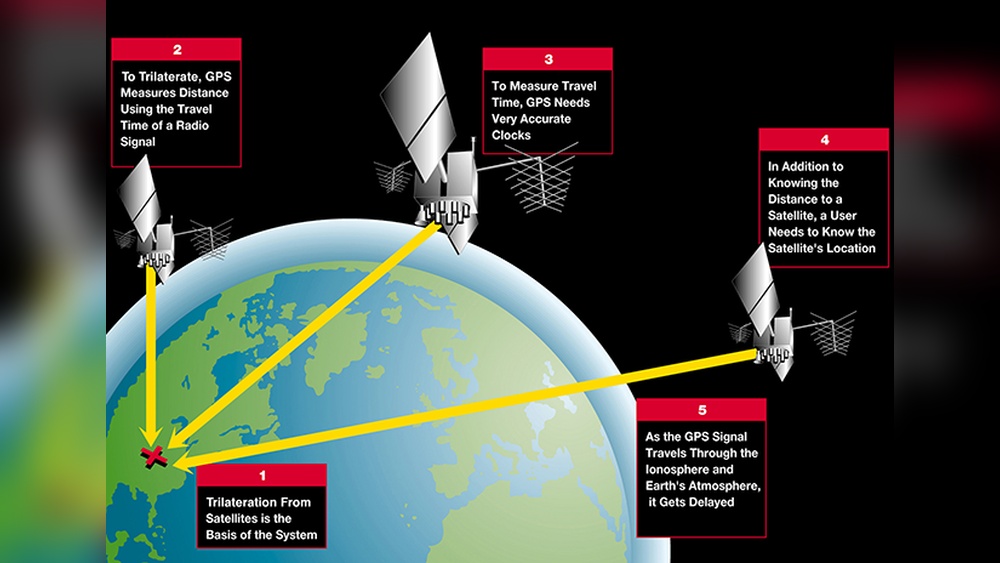
The triangulation process is key to how GPS navigation works. It helps your device find your exact location on Earth. This process uses signals from satellites in space. Each satellite sends a signal with its position and the time it was sent. Your GPS device receives these signals and measures how far away each satellite is. Using these distances, the device can pinpoint your position. This happens quickly and accurately, allowing real-time navigation.
Distance Calculation
Distance calculation starts with measuring the time a signal takes to reach your device. Satellites send signals with precise timestamps. Your GPS device notes the time it receives each signal. The difference in time shows how long the signal traveled. Since signals travel at the speed of light, the device multiplies time by speed to get distance. This distance is from the satellite to your device. The device needs distances from at least three satellites.
Position Fixing
Position fixing uses distances from multiple satellites. Each distance forms a circle around a satellite. Your device is located somewhere on each circle’s edge. The point where at least three circles intersect is your position. This process is called triangulation. More satellites improve accuracy and reduce errors. The device then shows your exact location on the map. This helps with directions and tracking your route.
Time Synchronization
Time synchronization is key to how GPS navigation works. GPS satellites and receivers must share the exact time. This allows the system to measure distances accurately. Without precise time, GPS signals would be useless. The system relies on very exact clocks onboard satellites and in receivers on Earth.
Atomic Clocks
Each GPS satellite has several atomic clocks. These clocks keep time with incredible accuracy. They use atoms like cesium or rubidium to maintain steady vibrations. These vibrations help measure time down to billionths of a second. Accurate time is critical because GPS calculates position by measuring how long signals take to travel.
Signal Timing
Satellites send signals with a timestamp from their atomic clocks. GPS receivers on Earth compare the arrival time to the timestamp. This difference shows how far the signal traveled. The receiver uses signals from multiple satellites to find its location. If the clocks were not synced, the distance calculations would be wrong. Good timing ensures reliable and precise GPS navigation.
Error Sources
GPS navigation depends on signals from satellites. These signals can face problems that cause errors. Errors affect how accurate the GPS location is. Understanding error sources helps us know why GPS sometimes gives wrong positions.
Atmospheric Effects
GPS signals travel through the atmosphere. The ionosphere and troposphere can slow the signals down. This delay causes errors in calculating the distance to satellites. Weather changes also affect signal speed. These effects can cause GPS to show a wrong location by several meters.
Multipath Errors
Signals can bounce off buildings, trees, or other objects. This is called multipath. The GPS receiver may get the direct signal and the bounced signal. The bounced signal takes longer to arrive. This mix-up causes the GPS to miscalculate the position. Multipath errors are common in cities and near tall structures.
Satellite Geometry
The position of satellites in the sky matters. Good geometry means satellites are spread out well. Poor geometry means satellites are close together in one area. When satellites cluster, the GPS accuracy drops. The receiver finds it harder to pinpoint the exact location. Satellite geometry changes as satellites move around Earth.
Augmentation Systems
Augmentation systems improve GPS accuracy. They help correct errors in satellite signals. These systems boost the reliability of location data. They are essential for precise navigation and safety.
Waas And Egnos
WAAS stands for Wide Area Augmentation System. It works mainly in North America. WAAS uses ground stations to monitor GPS signals. It sends correction messages through satellites. This process reduces GPS errors to less than 3 meters.
EGNOS means European Geostationary Navigation Overlay Service. It serves Europe with similar functions. EGNOS improves GPS accuracy for airplanes and drivers. It corrects timing and position errors quickly. Both WAAS and EGNOS help GPS work better.
Differential Gps
Differential GPS, or DGPS, uses fixed ground stations. These stations know their exact locations. They compare GPS signals with their true positions. Then, they send correction data to nearby GPS receivers. DGPS cuts down GPS errors to about 1-3 meters.
This system is popular in farming, shipping, and surveying. It ensures GPS readings are accurate and dependable. DGPS works well in areas with many ground stations. It makes GPS navigation clearer and safer.
Credit: spaceplace.nasa.gov
Navigation Applications
Navigation applications use GPS technology to guide users from one place to another. These apps show exact locations on maps and help plan routes. They serve many purposes beyond simple directions.
Different fields use navigation apps to improve safety, efficiency, and experience. From tracking vehicles to helping in emergencies, GPS apps play a key role.
Vehicle Tracking
Companies use GPS apps to follow their vehicles in real time. This helps manage fleets and ensure timely deliveries. Drivers get clear routes to avoid traffic and save fuel. Vehicle tracking also improves security by spotting theft or loss quickly.
Outdoor Activities
Hikers, bikers, and campers rely on GPS apps for safe adventures. These apps mark trails and points of interest. They help users find their way in forests or mountains. Outdoor enthusiasts can record paths and share their routes with others.
Emergency Services
Emergency responders use navigation apps to reach people fast. GPS helps locate accidents or disasters precisely. Ambulances, fire trucks, and police cars get the fastest routes. This saves lives by reducing response time and avoiding delays.
Future Developments
The future of GPS navigation holds exciting changes. Technology will make navigation faster and more accurate. These improvements will help many users in daily life and work. Advances in satellites, precision, and artificial intelligence will shape the next generation of GPS systems.
Next-gen Satellites
New satellites will orbit closer to Earth. This means they send stronger signals to devices. More satellites in the sky will cover remote areas better. These changes will reduce signal loss and delays. Users will enjoy smoother navigation anywhere on the planet.
Improved Accuracy
GPS devices will pinpoint locations within centimeters. This level of accuracy helps in driving and walking directions. It also benefits industries like farming and construction. High accuracy means fewer mistakes and safer journeys. Devices will use better chips and signals to achieve this.
Integration With Ai
Artificial intelligence will guide navigation systems. AI can learn user habits and suggest smarter routes. It will adapt to traffic and weather changes quickly. Voice assistants will understand simple commands better. This integration makes GPS more helpful and user-friendly.
Frequently Asked Questions
How Does Gps Navigation Determine My Location?
GPS navigation calculates your location by receiving signals from multiple satellites. It measures the distance from at least four satellites to pinpoint your exact position using trilateration.
Why Is Gps Navigation Accurate For Directions?
GPS uses a network of 24+ satellites orbiting Earth, providing real-time location data. This system ensures precise, reliable navigation and accurate route guidance globally.
Can Gps Navigation Work Indoors Or Underground?
GPS signals struggle indoors or underground due to obstruction by buildings or earth. In such cases, devices may switch to Wi-Fi or cellular networks for approximate location.
How Do Gps Satellites Communicate With My Device?
Satellites continuously transmit radio signals containing their position and time. Your device processes these signals to calculate your exact location and provide navigation.
Conclusion
GPS navigation helps us find places quickly and easily. Satellites send signals to your device to show your location. Your device uses these signals to guide you step by step. This technology works worldwide, in cities and remote areas. It makes travel safer and saves time every day.
Understanding how GPS works can help you use it better. Keep your device updated and check your signal for best results. GPS navigation is a simple tool that helps everyone move with confidence.
